The late Victorian and Edwardian eras were defined by a massive clash of ideals. On one hand, it was the age of the industrial revolution, empirical science, and the birth of modern forensic logic. On the other hand, it was an era desperately grasping in the dark for magic, plagued by a cultural obsession with spiritualism, séances, and the occult. Nowhere is this contradiction more perfectly illustrated than in the strange, true story of the Cottingley Fairies.
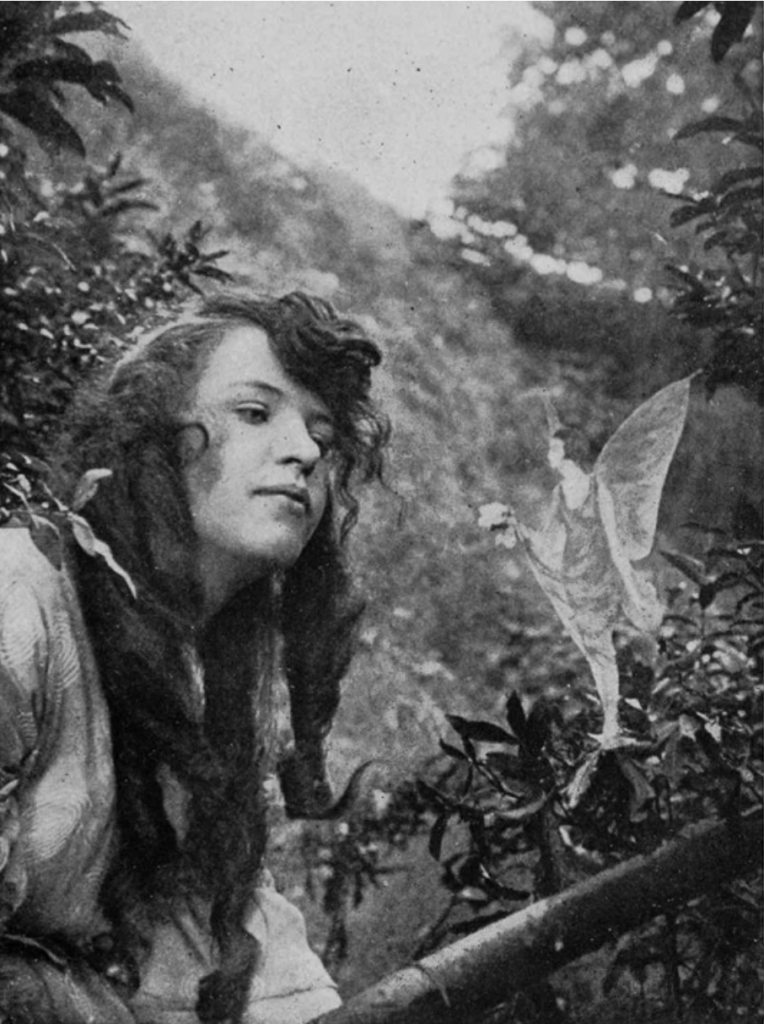
In the summer of 1917, two young girls named Elsie and Frances, playing in a garden in Yorkshire, England, borrowed a camera and took a series of photographs that purportedly showed them interacting with a troupe of winged faeries. To the modern eye, the mechanics of the hoax are obvious: Elsie had simply painted watercolors of fairies, cut them out of paper, and secured them to the foliage using hatpins. Yet, these flat, paper illusions managed to fool one of the most brilliant and famous minds of the generation: Sir Arthur Conan Doyle, the creator of Sherlock Holmes.
Why Sir Arthur Conan Doyle Was Fascinated With the Afterlife
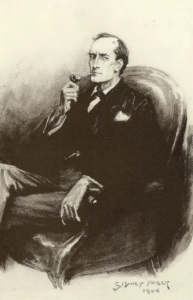
It is a profound historical irony that the man who invented the world’s most famous literary symbol of cold, calculating logic was himself a fervent spiritualist. In 1920, Conan Doyle penned a passionate article declaring the photographs were undeniable, scientific proof of psychic phenomena. He even published this claim in The Strand—the exact same popular magazine that had first published the highly logical adventures of Sherlock Holmes.
But looking back through the archives, Conan Doyle’s belief becomes less foolish and more tragic. By the time he saw the Cottingley photographs, he had recently lost both his son and his brother in the horrors of World War I. For the grieving author, proving the existence of the supernatural wasn’t a parlor trick; it was a desperate, hopeful search for proof that there was a world beyond the grim, mechanized reality of the war.
He was not alone in this pursuit. During this same era, the legendary poet W.B. Yeats was actively collecting Irish folklore and participating in the Hermetic Order of the Golden Dawn, a secret society devoted to the study of the occult. Yeats penned The Celtic Twilight, a beautiful but earnest documentation of myth and faerie encounters.
As archivists, the Cottingley Fairies hoax remains a fascinating study. It reminds us that intellect cannot always protect us from grief, and that even the sharpest minds want to believe in magic when the mundane world becomes too heavy to bear.
Curating Your Own Archive
If you are fascinated by the dual nature of logic and the occult during this historical period, there are a few additions that belong on any literature lover’s desk.
(The Ink & Shadow Archive is reader-supported. As an Amazon Associate, we earn a small commission from qualifying purchases made through these links.)
-
The Cottingley Fairies Book– Learn more about this fascinating case that still inspires study and debate with a dedicated look at the photographs that fooled the world.
-
Sherlock Holmes Leather-Bound Collection – For a dive into the analytical side of the era, picking up a vintage-style collection of Sir Arthur Conan Doyle’s original Sherlock Holmes stories provides a brilliant look at Victorian deduction.
-
W.B. Yeats – The Celtic Twilight – To balance logic with raw, atmospheric folklore, Yeats’s classic documentation of faerie sightings is essential reading for anyone curious about how the greatest poets viewed the supernatural.
-
Vintage Brass Magnifying Glass – Add a touch of authentic investigative atmosphere to your own workspace with a heavy, brass magnifying glass—an aesthetic nod to dissecting both historical documents and mysterious photographs.
Leave a Reply