Category: Victorian Curiosities

  • Harry Kellar: The Wizard Who Enchanted 19th Century America


    Harry Kellar magic show


    Archivist’s Note: This briefing may contain affiliate links. If you acquire an artifact through these links, the Archive may earn a small commission at no extra cost to you, which helps keep the candles lit.

    In the late 19th century, American entertainment was a hungry machine: rail lines expanding, cities swelling, theaters multiplying, and audiences demanding ever bigger wonders. Into that world stepped a bald, avuncular showman with a quick temper, a meticulous streak, and a gift for turning illusion into event. He was born Heinrich Keller in Erie, Pennsylvania, in 1849, and he’d die in 1922 as Harry Kellar—hailed in his prime as the “King” of American magic.

    Kellar’s story is part rags-to-spotlight myth and part hard-edged business history. It’s also a reminder that stage magic, for all its sparkle, has always lived in the gray zone between invention, imitation, and outright theft.

    A Runaway Becomes an Apprentice to a “Fakir”

    Kellar ran away from home at 11, an age that reads as shocking now, but was not unheard of in that era’s rough-and-ready economy. He drifted through odd jobs from Cleveland to New York until one night tilted his life: he saw a magic show by the “Fakir of Ava” and became obsessed.

    The “Fakir,” despite the exotic billing, was actually an Englishman named Isaiah Harris Hughes. The persona was marketing—an early example of the way magicians sold mystery as much as method. When Hughes placed an ad looking for a boy assistant in Buffalo, Kellar applied…and (in a wonderfully theatrical detail) allegedly got the job because the magician trusted his dog’s instincts. The dog liked Harry, and that was that.

    Apprenticeship in magic was not a gentle mentorship. It was labor, travel, and learning by doing—often under a boss who guarded secrets like gold. Kellar stumbled early with a solo show at 16 (a financial failure), kept apprenticing, then tried again two years later and found success—though, as he’d learn repeatedly, show business could be feast or famine.

    From Spirit Cabinets to Shipwreck

    Disheartened, he joined the orbit of the Davenport Brothers, famous for their “spirit cabinet” performances. They positioned themselves not as magicians but as mediums “summoning” spirits—riding the era’s appetite for Spiritualism and controversy. Kellar started as an assistant, rose to advance agent and business manager, and learned the tightly protected workings of the cabinet act. After four years and poor treatment, he left—then toured with William Fay (another Davenport associate) across Canada, Cuba, Mexico, and South America, presenting a copy of the cabinet act and Kellar’s own magic.

    Then came catastrophe with cinematic clarity: in August 1875, the Royal Mail steamer Boyne struck rocks off Brittany in dense fog. Passengers survived, but Kellar’s worldly and professional possessions did not—his show effects, clothes, and a fortune’s worth of curios and valuables. He made it to shore essentially with the clothes on his back and a ring, and had to rebuild from nothing.

    That shipwreck mattered beyond the drama: it forced Kellar to reassemble a show in a period when apparatus, access, and secrets were everything. It also nudged him toward an approach that would define him—acquiring spectacular effects by any means available, then presenting them with polished theatrical care.

    Building “Kellar” (and borrowing “Heller”)

    In England, Kellar visited Egyptian Hall, then a major home for magic—and saw Buatier de Kolta perform the Vanishing Birdcage. De Kolta wouldn’t sell the secret, but Kellar obtained a duplicate through de Kolta’s cousin for $750 (a serious sum at the time). Back in America, a manufacturer agreed to reconstruct Kellar’s lost props in exchange for the secret of that cage. This was Kellar in a nutshell: aggressively practical, willing to pay, trade, and bargain for methods that could anchor a new act.

    He formed a troupe called “The Royal Illusionists” (a name “borrowed” from Egyptian Hall) and toured widely. Somewhere in this evolution, he changed his name from Keller to Kellar—purportedly out of respect for magician Robert Heller, though the similarity sparked accusations that he aimed to profit off Heller’s reputation. The New York Sun noted the resemblance bluntly, and while Kellar tried to correct the record, the controversy stuck.

    Even here, you can see the double nature of his rise: he built a persona with real grit and skill, but he didn’t always worry about stepping on reputations to do it.

    Rivalry, reinvention, and the machinery of wonder

    Back in America, Kellar faced the towering presence of Alexander Herrmann, the era’s refined, witty, improvisational star. Their rivalry was costly and bitter early on, then softened into friendship as both men eventually recognized that the feud was bad for business and unnecessary in a big country.

    Kellar was often described as bold and distinctly American, meticulous and direct. He was not celebrated for sleight of hand; he relied more on gimmicks and apparatus than dexterity. That isn’t a knock so much as a window into his genius. Kellar understood that audiences remembered moments, and moments could be engineered, through staging, pacing, story, and big mechanical impossibilities that felt like modern miracles.

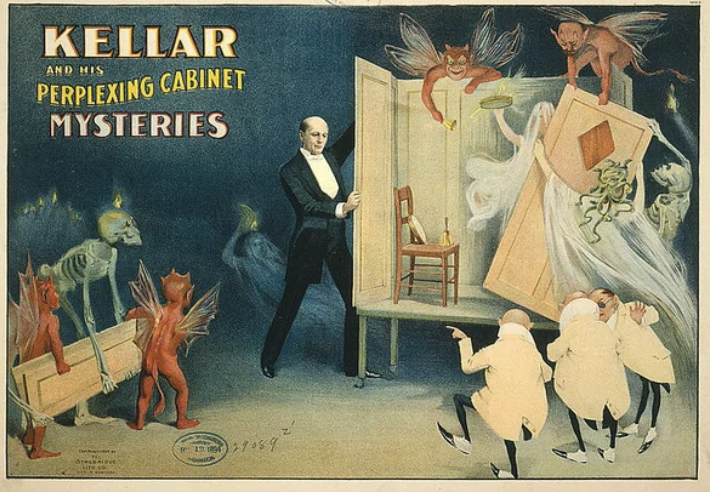
    His posters, too, became part of the show. Advertising emphasized imps and devils—winking at “otherworldly help” and the delicious taboo that magic always half-invited. Long before “branding” was a business-school word, Kellar grasped it.

    There’s even a (contested) theory that Kellar’s public image helped inspire the Wizard of Oz —at least in part— because some illustrations resemble him. Whether or not that’s true, the theory itself is revealing: Kellar was famous enough to become a template for what “a wizard” looked like in the public imagination.

    The Floating Lady and the Charge of “Stealing Magic”

    If you want a single episode that captures both Kellar’s brilliance and the moral complication of his legacy, it’s his signature levitation: The Floating Lady.

    The illusion was a sensation, but according to accounts, it was not originally his. In 1901, Kellar heard that British magician John Nevil Maskelyne had a breathtaking new levitation in London. Kellar traveled to see it. Maskelyne refused to sell.

    Kellar watched from different seats, returned repeatedly, and remained baffled—until one night he marched onto the stage mid-performance, looked around, and left the theater, convinced he’d seen something important even if he couldn’t fully explain it.

    Eventually, Kellar hired away one of Maskelyne’s assistants, Paul Valadon, who revealed the true method. But there was a catch: the illusion had been built for Maskelyne’s theater. To make it a touring effect, Kellar had to redesign it from scratch, a daunting engineering and staging challenge.

    So was it theft? In a sense, yes: he used inside information obtained by poaching talent to reproduce a rival’s signature miracle. Yet it’s also true that Kellar’s version required significant reworking to function on the road, and he had the showmanship to make it the levitation Americans remembered.

    The uncomfortable truth is that this kind of appropriation was woven into the era’s magic economy. Secrets were currency, assistants were leverage, and “ownership” was hard to enforce. Kellar wasn’t unique, but his success made his borrowing more visible, and therefore more debated.

    The Mantle Passed and the Final Tribute

    In 1908, Kellar retired and effectively passed the “mantle of magic” to Howard Thurston, an unprecedented, highly public crowning that was also, pragmatically, a business relationship. Thurston had the money to buy the show and the momentum to become the next great name.

    Kellar’s last stage performance came years later, in 1917, at a benefit in New York’s Hippodrome Theatre for families affected by the sinking of the troop ship Antilles. After Kellar finished, Harry Houdini announced he wouldn’t be allowed to simply walk offstage. Fellow magicians carried Kellar around in a sedan chair, bouquets rained down, and a crowd of thousands rose to sing “Auld Lang Syne.”

    Whatever one thinks of his methods. his peers and the public recognized they were watching the end of an era.

    Kellar has an undeniable, if often under-appreciated place in the history of magic. His legacy is complicated: it’s a case study in how showmanship can be both art and commerce, with some controversy thrown in. He helped define what an American stage magician could be—world-traveled, mechanically ingenious, theatrically confident—and he did it with a drive so relentless it occasionally crossed lines. That tension may be precisely why he remains worth writing about: Kellar wasn’t just a magician. He was a mirror for the age that applauded him.

    Sources

    America’s Second Great Magician -The Laundry

    Kellar’s Show Posters -The Public Domain Review


  • Spirit Photography: Did a Victorian Photographer Capture Abraham Lincoln’s Ghost?


    Ghostly image of a woman.

    In every era, people have looked for signs that the visible world is not the whole world. In the nineteenth century, when photography was still a mysterious and almost magical new technology, some believed the camera might do more than preserve ordinary life. It might reveal what the human eye could not see: the dead.

    That hope gave rise to one of the strangest chapters in photographic history: Victorian spirit photography.

    Spirit photography emerged in the broader cultural climate of, a movement that became hugely popular in the mid-to-late 1800s in Britain and the United States. Séances, mediums, table-rapping, and attempts to communicate with departed loved ones were no longer fringe curiosities. They became a serious social phenomenon, especially in a century marked by high mortality rates, war, and disease. For grieving families, the promise that technology could offer evidence of survival after death was deeply comforting.

    Photography seemed uniquely suited to that promise. Early cameras already felt uncanny to many people. They froze time. They captured likenesses with startling accuracy. Long exposure times could create strange blurs, faded figures, and accidental distortions. If a camera could record what the eye missed in ordinary life, why not a spirit standing just outside normal perception?

    Did a Camera Capture Abraham Lincoln’s Ghost?

    Abraham Lincoln's Ghost

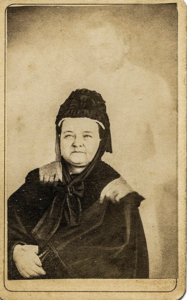
    The most famous example of spirit photography is the image of Mary Todd Lincoln seated in a chair, with what appears to be the ghostly figure of Abraham Lincoln standing behind her, his hands resting protectively on her shoulders.

    This photo was taken by William H. Mumler, a name central to the story of spirit photography. Mumler became famous in the 1860s for portraits in which faint, translucent extra figures appeared near the living sitter. He claimed these forms were spirits, often identified by clients as deceased relatives.

    To believers, the Lincoln image was moving proof that the dead remained present. To skeptics, it was a masterclass in photographic deception.

    How Spirit Photos Could be Faked

    There were several ways ghost photos could be faked.

    The most famous technique is double exposure, in which the same photographic plate is exposed twice. First, a “ghost” figure would be photographed, often draped in light fabric or posed against a dark background. Then the plate would be exposed again with the paying client seated normally. The result could make the first figure appear faint, transparent, and floating. To viewers unfamiliar with photographic processes, the effect could look astonishingly supernatural.

    Another method involved composite printing, where separate negatives were combined during the printing process. Photographers could also use pre-exposed glass plates, hidden reflections, or subtle staging tricks to create mysterious forms. Because early photographic methods were technically complex and poorly understood by the public, photographers had an enormous advantage. Clients saw the finished image, not the manipulations behind it.

    This did not mean every spirit photograph was a deliberate fraud. Some may have resulted from accidents, contamination, or misjudged exposures. But the history of the field strongly suggests that many practitioners exploited a mix of technical ambiguity and emotional vulnerability. Mumler himself was eventually tried for fraud in 1869, though he was acquitted. Acquittal did not prove his photos genuine; it mainly showed that proving photographic trickery in court was not easy. Today, more than 150 years later, we are facing similar issues when it comes to AI-generated photos and videos.

    What makes spirit photography fascinating is not just the hoaxing, but the sincerity around it. Many people truly wanted to believe. The technology gave shape to grief. It turned longing into an image.

    Kirlian Photography and Aura Cameras

    That pattern did not disappear with the Victorian era. It resurfaced in newer forms, including the twentieth-century fascination with Kirlian photography. Developed in 1939 by Semyon and Valentina Kirlian, this technique produces glowing outlines around objects placed in a high-voltage electrical field. Leaves, fingertips, coins, and other objects can appear surrounded by radiant fringes of light. Unsurprisingly, some people interpreted these images as photographs of an aura, life force, or spiritual energy field.

    Once again, a technology that produced visually striking, poorly understood effects became linked to the supernatural.

    But as with spirit photography, the skeptical explanation is more grounded. The glow in Kirlian images is generally understood to result from coronal discharge: electrical ionization affected by moisture, pressure, conductivity, film type, and other physical conditions. A living leaf and a dry leaf may produce different patterns, not because one has a stronger soul, but because their material properties differ. Human fingertips can show changing “auras” depending on sweat, oils, contact, and voltage. The images are real photographs of a real phenomenon. But whether this reveals the actual colors of an aura is a matter that’s highly contested.

    Spirit photography and Kirlian photography are both compelling for similar reasons. They belong to different centuries and different technologies, yet they express the same human impulse: to use instruments to reach beyond ordinary perception. In both cases, people hoped a machine could verify what intuition, religion, or personal experience suggested —that there is more to reality than material appearances.

    An open-minded but skeptical view leaves room for wonder without abandoning critical thinking. It is possible to appreciate why spirit photographs moved people so deeply while also recognizing how easily they could be manufactured. It is possible to find Kirlian images beautiful and intriguing while accepting that electrical discharge is not the same thing as proof of an aura.

    The supernatural has often borrowed the authority of technology. Cameras, radios, EVP recorders, thermal sensors, and now AI image tools all carry a similar promise: maybe this device will show us what we have missed. Maybe this time the invisible world will leave a trace.

    So far, the evidence remains ambiguous at best. But the desire behind it is unmistakable. From Victorian mourning portraits to glowing Kirlian halos, these images reveal less about ghosts than about us: our grief, our curiosity, and our enduring hope that the boundary between worlds might not be final.

    Learn More About Spirit Photography and Spiritualism

    Archivist’s Note: This section contains affiliate links. If you acquire an artifact through these links, the Archive may earn a small commission at no extra cost to you, which helps keep the candles lit.


    Spirits, Seers & Seances: Victorian Spiritualism, Magic & the Supernatural -a thorough study of this fascinating movement, including hypnotism, automatic writing, clairvoyance, and the belief in ghosts, by Steele Alexandra Douris.

    The History of Spiritualism -Arthur Conan Doyle, the creator of Sherlock Holmes, was obsessed with spiritualism and wrote about it himself in this classic work.

    Digital Kirlian Photography -Explore the mysteries of Kirlian photography and learn to take your own photos of auras.

    Mini-Vintage Digital Camera -Get the best of both worlds with a vintage style camera that takes great digital photos.


  • The Bizarre and Sinister Ways Victorians Used Herbs and Flowers

    Victorian apothecary scene

    In the gaslit drawing rooms of the nineteenth century, where propriety masked a thousand unspoken desires, herbs had uses beyond the simply culinary or medicinal. They were tools of transformation, weapons of subtle warfare, and gateways to the forbidden. The Victorians, with their love of elaborate rituals and coded communication, turned the natural world into something far more sinister and seductive. From the deliberate poisoning of one’s own beauty to the cultivation of gardens designed to kill, herbs became the quiet accomplices of an age obsessed with both elegance and mortality.

    The Belladonna Craze: Beauty Through Poison

    Perhaps no herb captured the Victorian imagination quite like Atropa belladonna, the deadly nightshade. Its very name, which means “beautiful lady,” reveals the dark bargain at its heart. Women of the era, desperate to achieve the wide-eyed, luminous look considered the height of feminine fragility, would carefully dilute the plant’s juice and apply drops directly into their eyes. The atropine in belladonna caused the pupils to dilate dramatically, creating that dreamy, almost feverish stare so prized in portraits and poetry.

    The effect was undeniably striking, but it came at a cost. Prolonged use could blur vision, cause light sensitivity, and even lead to permanent damage. Yet the risk only heightened the allure. In an age when women were expected to appear delicate and otherworldly, the ability to chemically manufacture vulnerability was irresistible.

    One can almost picture the scene: a young lady seated before her dressing table, a tiny vial of nightshade extract beside her pearl-handled brush, preparing to step into the ballroom with eyes like black pools. The same plant that could stop a heart was being used to make hearts flutter. It was a perfect Victorian paradox—beauty achieved through controlled self-destruction.

    The Language of Flowers

    While the sentimental language of flowers is often remembered as a charming Victorian pastime, its darker applications are far more intriguing. Floriography is the art of using plants or flowers to send coded messages. This allowed for the discreet expression of emotions that polite society forbade. A bouquet could convey love, yes—but it could also deliver a calculated insult or even a veiled curse.

    Certain flowers carried meanings that were anything but romantic. A yellow carnation signified disdain or rejection. Basil, surprisingly, stood for hatred. Other plants warned of treachery or impending doom. A Victorian might receive a seemingly innocent arrangement only to discover, upon consulting her flower dictionary, that she had been told she was false, unworthy, or actively despised. These messages were all the more potent because they could be delivered in public without a single spoken word.

    The practice turned gardens and greenhouses into armories. A woman might cultivate specific plants not for their fragrance but for their capacity to wound. In this way, the language of flowers became a sophisticated form of psychological warfare, perfectly suited to an era that prized indirect communication and social maneuvering. The same system that allowed lovers to exchange tender sentiments also enabled rivals to exchange silent threats.

    The Poison Garden

    Nowhere is the Victorian fascination with lethal herbs more literal than in the concept of the poison garden. While the famous Alnwick Poison Garden in Northumberland is a modern recreation, it draws directly from a long tradition of such spaces. Historical poison gardens existed across Europe for centuries, often attached to apothecaries, universities, or the estates of the wealthy and curious.

    Within their walls grew aconite (wolfsbane), whose roots could stop a heart in minutes; hemlock, the plant that famously ended Socrates; and strychnine-rich nux vomica. Every specimen was labeled, studied, and sometimes tested. The gardens served both scientific and macabre purposes, allowing physicians and scholars to understand poisons while simultaneously satisfying a darker curiosity about the boundary between life and death.

    The very existence of such gardens speaks to the Victorian mindset. In an age of rapid scientific advancement, the line between medicine and murder was thin. A skilled herbalist could save a life or end one with the same plant. The poison garden made that duality visible, turning horticulture into theater. Visitors could walk among plants that might kill them if touched or tasted, experiencing a controlled brush with mortality that mirrored the era’s broader obsession with death, mourning, and the supernatural.

    The Enduring Fascination of Victorian Oddities

    In our own time, it’s easy to romanticize the Victorian era as one of elegance and good manners. We can picture polite conversations over tea and picturesque gardens. But this was also when Gothic romance (the Brontës) and Gothic horror (Edgar Allen Poe, Mary Shelley, Bram Stoker) started to get popular. This was an era full of oddities and extremes of both light and dark.

    The Victorians were fond of veiled messages and subtlety, which is why herbs and flowers were used in so many intricate ways. They were real instruments of transformation, communication, and, sometimes, destruction. And perhaps that is why they continue to fascinate us: they remind us that even the most delicate petal can conceal a lethal heart.

    Recommendations For Your Own Apothecary

    Archivist’s Note: This section contains affiliate links. If you acquire an artifact through these links, the Archive may earn a small commission at no extra cost to you, which helps keep the candles lit.

    Here are some items to help you build your own Victorian-style apothecary.

    Mortar and Pestle: for crushing herbs and spices.

    Vintage Style Small Glass Bottles

    Flora’s Dictionary: The Victorian Language of Herbs and Flowers -learn the intricate coded meanings Victorians used for herbs and flowers.


  • Love and Lethality: The Dark History of Victorian Poison Rings

    Man inserting something into a Victorian poison ring.

    There’s something almost unfair about Victorian compartment rings (also known as poison rings): they’re too beautiful to be so unsettling.

    At first glance, the piece looks like any other gem-set ring —an opal with a milky flash, a garnet glowing like a held ember, a sober onyx that drinks the light. But the mystery is not the stone. It’s what the stone hides. With a careful twist, a hinge, or a discreet latch, the setting opens to reveal a tiny cavity tucked behind the gemstone: a private chamber pressed against the skin, invisible to anyone who doesn’t know where to look.

    And that’s where the ring’s dark charisma begins. The exact same design, this miniature secret compartment, served the two extremes of human experience. It could be a vessel for murder, meant to deliver poison with a theatrical flick of the hand. Or it could be a reliquary for love, meant to hold a lock of hair, a painted portrait, or a trace of the dead carried close as a vow. In a culture obsessed with memento mori —“Remember that you must die”— the compartment ring became a wearable paradox: romance and rot, devotion and danger, tenderness and threat.

    A Secret Compartment, Not a Public Seal: Compartment Rings vs. Signet Rings

    It helps to contrast compartment rings with their more straightforward cousin, the signet ring (discussed in another post). A signet is designed for declaration. Historically, it bore a family crest or personal emblem, pressed into wax to seal letters and announce identity. Even when worn purely as style, the signet’s job is still public: it says, this is who I am, in broad, readable strokes.

    A compartment ring does the opposite. It is for concealment rather than proclamation. If a signet ring is a signature on display, a compartment ring is a locked drawer. Its meaning depends on what you can’t see and what the wearer won’t say.

    Ancient Origins and Renaissance Intrigue

    Jewelry with hidden spaces didn’t begin in the 1800s. Across ancient and medieval worlds, small personal containers such as amulets, pendants, and rings held everything from perfumes and medicinal compounds to sacred relics and protective charms. The idea is timeless: if something matters enough, you keep it close and well hidden.

    By the Renaissance, the hidden compartment gained a more glamorous and sinister reputation. Tales of elite intrigue and courts full of shifting loyalties and sudden deaths made secrecy fashionable. Figures like the Borgias became shorthand for a whole genre of whispered history: beautiful objects, impeccable manners, and danger served in a goblet. Whether every story was true hardly mattered. The lore stuck. The “locket ring” became a character in the public imagination: a tiny stage prop for betrayal.

    The Victorians and the Pleasure of the Dark

    Victorian culture had an appetite for the macabre that feels startlingly modern. This was the era of gothic novels, sensational newspaper reports, spiritualism, séances, and graveyard imagery softened into art. Death was not hidden away. It was ritualized, symbolized, and—often—beautifully merchandised.

    Memento mori wasn’t merely an aesthetic; it was an emotional philosophy. To remember death was to intensify life, to make love feel urgent and devotion feel sacred. A ring that literally contained a secret under a gemstone fit the worldview perfectly. It offered a controlled flirtation with mortality: a tiny “what if” worn on the hand.

    Victorians were fascinated by the legend of poison rings for the same reason people today binge true crime or collect antique mourning jewelry on social media. The idea was thrilling precisely because it was intimate.

    Queen Victoria and a Nation in Mourning

    Then came the pivot from lethality to longing.

    When Prince Albert died in 1861, Queen Victoria’s grief became national policy. Her prolonged, highly visible mourning shaped fashion, etiquette, and the emotional temperature of an entire society. Black clothing, jet jewelry, strict social rules around bereavement—mourning became both private suffering and public identity.

    In that climate, compartment rings found a new purpose. The secret space behind the stone no longer had to suggest poison. It could hold something, in its own way, far more haunting: a fragment of the beloved. A curl of hair. A tiny painted portrait. A scrap of fabric. Sometimes even a small inscription folded tight, like a message meant to be read only by the living hand that wore it.

    The compartment became a domestic shrine. The hand that once might have been imagined slipping a powder into wine could now be imagined stroking a coffin lid, then returning to daily life with grief hidden under a gemstone.

    Hair Weaving: The Macabre Romance of Victorian Craft

    Nothing captures Victorian sentimentality quite like hair jewelry. To modern sensibilities, it can feel unsettling. Hair is intimate in a way flowers and photographs aren’t. But that intimacy was the point.

    Hair weaving transformed a physical remnant into a crafted artifact. Braided, plaited, or arranged into delicate patterns beneath glass, hair became a material of devotion, an enduring part of a person when everything else was subject to decay. It was also practical. Hair lasts. It is stubbornly permanent, a quiet rebuke to the body’s fragility.

    Placed into the hidden compartment of a ring, a lock of hair became a private memento that could travel anywhere. Mourning jewelry wasn’t only about sadness; it was about continuity. The Victorians made grief wearable so that love wouldn’t have to end just because a life did.

    The dichotomy of the compartment ring has a deep philosophical meaning. The same secret space that could carry death could also carry the refusal to let love die.

    Why We’re Still Obsessed

    We live in an era of glass screens and public oversharing. Yet the appeal of hidden compartments hasn’t faded. If anything, it has intensified. Victorian compartment rings speak to a craving that never goes away: the desire for mystery in a world that often feels too exposed.

    They also offer connection. To hold an object that once held something—poison, prayer, hair, a miniature portrait—is to feel history as something tactile, not abstract. A compartment ring insists that the past was not just politics and dates, but hands and heartbeats, dinner parties and funerals, love letters and losses.

    In the end, Victorian compartment rings endure because they refuse to choose a single meaning. They are simultaneously romantic and ominous, devotional and suspicious. They remind us that human beings have always been capable of tenderness and violence—sometimes in the same breath, sometimes in the same hand.

    Partake in this Mysterious Tradition

    Archivist’s Note: This briefing contains affiliate links. If you acquire an artifact through these links, the Archive may earn a small commission at no extra cost to you, which helps keep the candles lit.

    You may come across a genuine Victorian compartment or poison ring in an antique store, or online auction. Until you find the perfect piece, you can get a modern replica of a vintage poison ring. Use only for a fashion statement or to store harmless items!

    Learn more about the fascinating period of English history when Queen Victoria reigned.


  • The Creator of Sherlock Holmes and the Photographs That Fooled the World

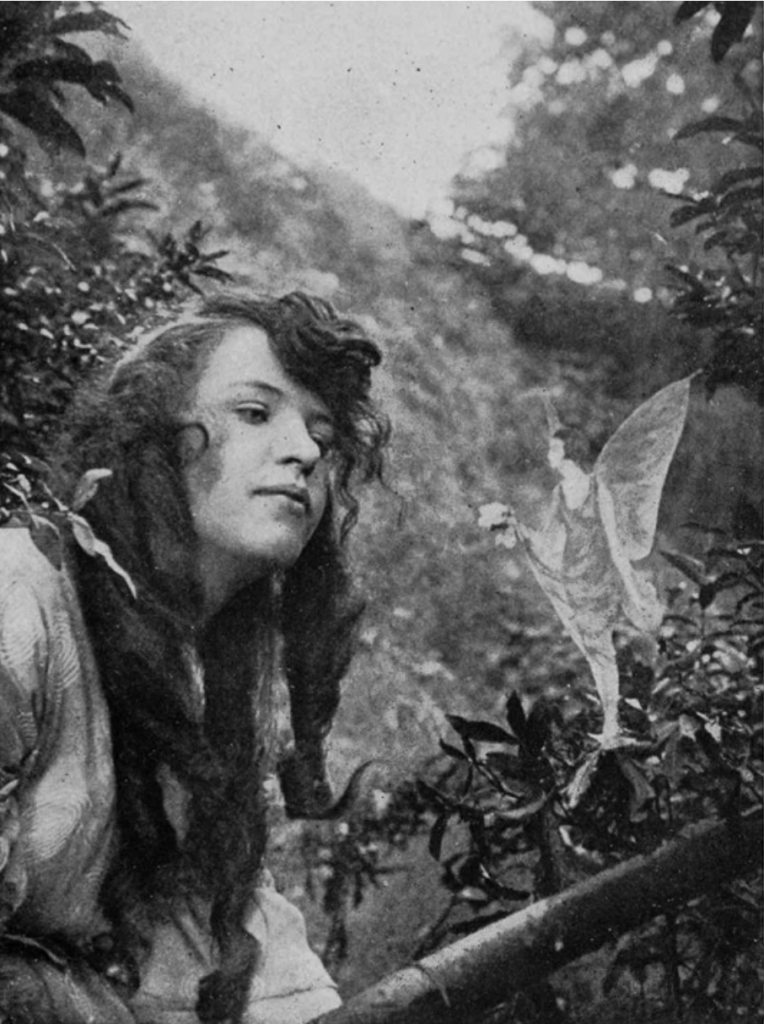
    Fairy image from Sir Arthur and the Fairies

    The late Victorian and Edwardian eras were defined by a massive clash of ideals. On one hand, it was the age of the industrial revolution, empirical science, and the birth of modern forensic logic. On the other hand, it was an era desperately grasping in the dark for magic, plagued by a cultural obsession with spiritualism, séances, and the occult. Nowhere is this contradiction more perfectly illustrated than in the strange, true story of the Cottingley Fairies.

    In the summer of 1917, two young girls named Elsie and Frances, playing in a garden in Yorkshire, England, borrowed a camera and took a series of photographs that purportedly showed them interacting with a troupe of winged faeries. To the modern eye, the mechanics of the hoax are obvious: Elsie had simply painted watercolors of fairies, cut them out of paper, and secured them to the foliage using hatpins. Yet, these flat, paper illusions managed to fool one of the most brilliant and famous minds of the generation: Sir Arthur Conan Doyle, the creator of Sherlock Holmes.

    Why Sir Arthur Conan Doyle Was Fascinated With the Afterlife

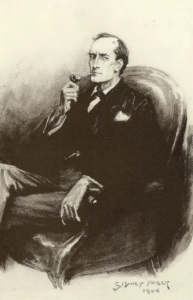
    Illustration of Sherlock Holmes by Sidney Paget.

    It is a profound historical irony that the man who invented the world’s most famous literary symbol of cold, calculating logic was himself a fervent spiritualist. In 1920, Conan Doyle penned a passionate article declaring the photographs were undeniable, scientific proof of psychic phenomena. He even published this claim in The Strand—the exact same popular magazine that had first published the highly logical adventures of Sherlock Holmes.

    But looking back through the archives, Conan Doyle’s belief becomes less foolish and more tragic. By the time he saw the Cottingley photographs, he had recently lost both his son and his brother in the horrors of World War I. For the grieving author, proving the existence of the supernatural wasn’t a parlor trick; it was a desperate, hopeful search for proof that there was a world beyond the grim, mechanized reality of the war.

    He was not alone in this pursuit. During this same era, the legendary poet W.B. Yeats was actively collecting Irish folklore and participating in the Hermetic Order of the Golden Dawn, a secret society devoted to the study of the occult. Yeats penned The Celtic Twilight, a beautiful but earnest documentation of myth and faerie encounters.

    As archivists, the Cottingley Fairies hoax remains a fascinating study. It reminds us that intellect cannot always protect us from grief, and that even the sharpest minds want to believe in magic when the mundane world becomes too heavy to bear.

    Curating Your Own Archive

    If you are fascinated by the dual nature of logic and the occult during this historical period, there are a few additions that belong on any literature lover’s desk.

    (The Ink & Shadow Archive is reader-supported. As an Amazon Associate, we earn a small commission from qualifying purchases made through these links.)

    • The Cottingley Fairies Book– Learn more about this fascinating case that still inspires study and debate with a dedicated look at the photographs that fooled the world.

    • Sherlock Holmes Leather-Bound Collection – For a dive into the analytical side of the era, picking up a vintage-style collection of Sir Arthur Conan Doyle’s original Sherlock Holmes stories provides a brilliant look at Victorian deduction.

    • W.B. Yeats – The Celtic Twilight – To balance logic with raw, atmospheric folklore, Yeats’s classic documentation of faerie sightings is essential reading for anyone curious about how the greatest poets viewed the supernatural.

    • Vintage Brass Magnifying Glass – Add a touch of authentic investigative atmosphere to your own workspace with a heavy, brass magnifying glass—an aesthetic nod to dissecting both historical documents and mysterious photographs.

  • Secrets in the Stacks: The Mysterious History of Bibliocloaking

    Old books on shelves
    Photo by gretta vosper on Unsplash

    Walk into any grand, dimly lit library, and you immediately feel the weight of a thousand stories pressing down from the shelves. But in the shadowed world of the occult, espionage, and Victorian scandal, books were not always used for reading.

    Sometimes, they were the perfect hiding place.

    The practice of hollowing out the pages of a book to conceal an object is known as bibliocloaking. It is a tradition that marries the reverence of literature with the thrill of deception—and it has a surprisingly dark and fascinating history.

    A Vault Hidden in Plain Sight

    The genius of the book safe lies in human psychology. Thieves, spies, and highwaymen might tear apart a mattress, pull up floorboards, or pry off wall panels, but very few criminals have the patience to shake open every single volume in a 5,000-book library.

    During the Renaissance and the Spanish Inquisition, hollowed-out book bindings were occasionally used to transport illicit materials or banned philosophical treatises undetected. By the Victorian era, as personal libraries became a symbol of wealth, the book safe became a staple of the gentleman’s study. They were used to hide scandalous love letters, emergency stashes of coins, and in more sinister cases, vials of arsenic or laudanum.

    The Spy’s Best Friend

    Bibliocloaking wasn’t just for Victorian romance and poisoners. During World War II, British intelligence (specifically MI9) took the concept to a new level. They created specialized books for prisoners of war that had maps, compasses, and tools seamlessly hidden inside the bindings to aid in escapes. To the untrained eye of a guard, it was just a harmless novel.

    A Mystery Novel Staple (And a Cozy Fantasy Favorite)

    Because of its secretive nature, the hollowed-out book naturally became a beloved trope in mystery and gothic literature. From classic Agatha Christie whodunits to modern heist films, the moment a character pulls a specific book from a shelf and the cover swings open to reveal a hidden key or a missing will, the audience leans in.

    It is a trope we love so much here at the Archive that it actually plays a role in the upcoming cozy fantasy novella, The Changeling’s Bookshop! After all, what better place to hide a dangerous magical manuscript than inside the shell of a mundane one?

    🗝️ Hide Your Own Secrets

    (The Ink & Shadow Archive is reader-supported. As an Amazon Associate, we earn a small commission from qualifying purchases made through these links.)

    While we (hopefully) don’t need to hide from the Inquisition or conceal Victorian poisons today, the need for a clever hiding place remains. Whether you want to stash spare keys, emergency cash, or your own private letters, a modern diversion safe is a beautiful, practical addition to any bookshelf.

    Here are a few of our favorite creative hiding spots to add to your own library:

    • The Classic Dictionary Combination Safe – From the outside, it looks exactly like a standard English Dictionary. Inside, it features a heavy steel combination lockbox. Perfect for valuables.
    • Faux-Leather Vintage Book Boxes– If you want the Dark Academia aesthetic without the heavy metal lock, this set of wooden boxes looks like antique, gold-foiled tomes.
    •  The Hidden Compartment Wall Clock– Not a book, but a classic diversion! This working wall clock opens up to reveal shelves for keys and emergency cash, hidden right in plain sight.
  • Gazing Into the Void: The Dark and Mystical History of Scrying Mirrors

    Dark mirror on wall

    Archivist’s Note: This briefing may contain affiliate links. If you acquire an artifact through these links, the Archive may earn a small commission at no extra cost to you, which helps keep the candles lit.

    When you look into a mirror, you expect the world to reflect back at you exactly as it is. We use silvered glass every day to fix our hair, adjust a collar, or check for a smudge on our cheek. But for centuries, the mirror was not just a tool for vanity; it was a doorway.

    If you step away from the polished silver and look back through history, you will find a much darker artifact: the scrying mirror. Diviners, occultists, and royal advisors didn’t use mirrors to see themselves—they used them to peer into the unknown.

    The Art of the Black Mirror

    Black Mirror is the title of a popular TV show that focuses on dystopian (usually tech-centered) scenarios. But the name comes from something much older. The practice of “scrying” is ancient. It involves staring into a reflective, usually dark surface, like a pool of black ink, a bowl of water, or dark polished stone, until the eyes lose focus and visions begin to appear. It is less about seeing a reflection and more about creating a blank canvas for the subconscious (or the spirit world) to project upon.

    While many cultures practiced water-scrying, the most infamous mystical mirrors were made of solid black obsidian.

    Obsidian is volcanic glass. When highly polished, it becomes a dark, glossy void. Long before European occultists got their hands on them, these mirrors were sacred to the Aztecs in Mesoamerica. They were closely associated with the god Tezcatlipoca, whose very name translates to “Smoking Mirror.” He was the deity of the night sky, divination, and sorcery. The Aztecs believed these mirrors were portals that could bridge the mortal realm with the world of the divine.

    Dr. John Dee’s Angelic Conversations

    Following the Spanish conquest in the 16th century, these sacred obsidian mirrors were brought back to Europe. One of them fell into the hands of a man who would cement the black mirror’s place in Western occult history: Dr. John Dee.

    John Dee was no fringe eccentric; he was the mathematical and astrological advisor to Queen Elizabeth I. He was a brilliant scholar, but his pursuit of knowledge eventually pushed past the boundaries of science and into the occult. Dee wanted to understand the hidden mechanics of the universe, and he believed the answers lay with angels.

    Using an Aztec obsidian mirror, Dee would conduct exhaustive scrying sessions. Because Dee himself was not a gifted “seer,” he employed a medium named Edward Kelley to stare into the dark glass. Kelley would gaze into the black surface for hours, frantically reporting the angelic beings he saw and the cryptic, divine languages they spoke, while Dee dutifully transcribed every word.

    Today, John Dee’s obsidian mirror rests in the British Museum, a quiet, dark stone that once commanded the attention of the English court.

    The Victorian Parlor Seance

    Centuries later, the Victorians, who were always eager to blend the macabre with high society, revived the dark mirror. During the height of the Spiritualist movement in the 19th century, death was a cultural obsession. Grieving families and curious thrill-seekers alike gathered in dimly lit drawing rooms to attempt communication with the “other side.”

    Scrying mirrors became a popular tool for these parlor séances. But there is a very real, very unsettling psychological reason why staring into a dark mirror works. Modern science calls it the Troxler Effect. If you stare at a fixed point in a dim room for long enough, your brain begins to filter out unchanging stimuli. Your peripheral vision blurs, the edges of the mirror seem to warp, and your mind, desperate to recognize patterns in the dark, starts to invent them. Faces twist, shadows move, and suddenly, you are seeing ghosts.

    Whether it was true spiritual communication or just the mind playing tricks in the candlelight, the dark mirror solidified its place as an icon of the macabre.

    Curate Your Own Dark Academia Aesthetic

    If reading about John Dee’s dark mirrors has you wanting to add a little Dark Academia aesthetic to your own bookshelf , here are a few gorgeous, affordable pieces I found to recreate the vibe:

    Black Obsidian Scrying Mirror: A polished volcanic glass mirror, very similar to the ones used by the Victorians.

     Ornate Vintage Hand Mirror: If you prefer the look of the antique silver mirror from my video.

    Flickering LED Taper Candles: The safest way to get that perfect, moody seance lighting for your desk.