There is a quiet obsession shared among those drawn to ancient institutions, dusty bindings, and ink that dried centuries before our grandmothers were born. We dream of wandering lost corridors lined with forgotten knowledge, our fingertips brushing against centuries of leather and vellum. Yet, tucked beneath the pristine stone of Vatican City lies a labyrinth where no wandering scholar is ever allowed to roam.
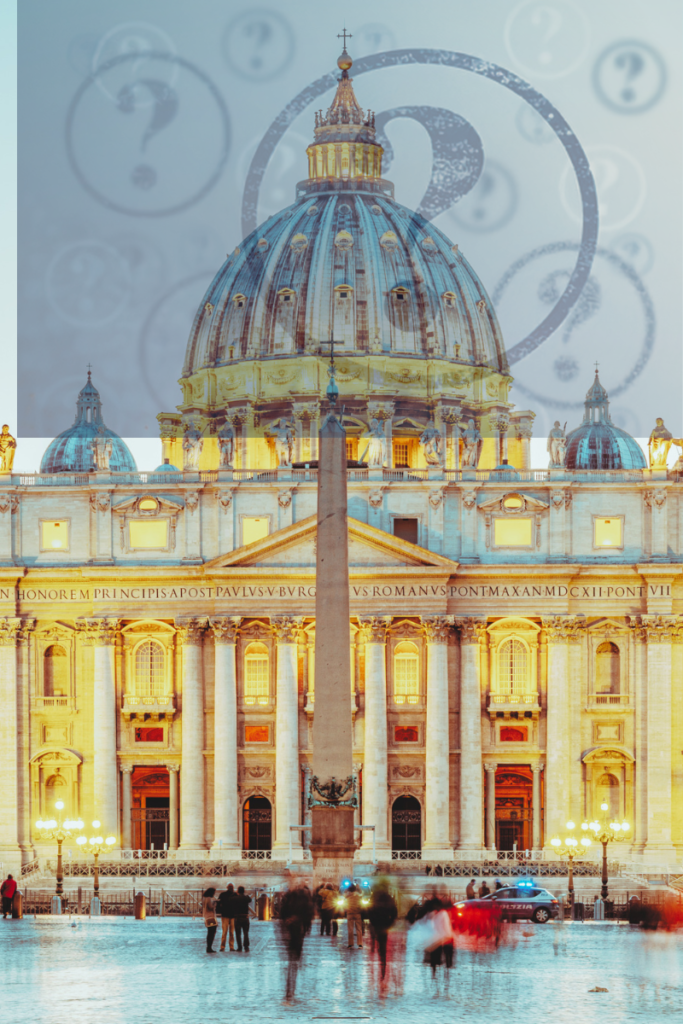
Carved into the earth beneath Rome rests an astonishing expanse: more than fifty miles of underground shelving, housing over two million historical documents spanning twelve centuries. For generations, this sanctuary of paper and wax seals carried a moniker that could easily belong to a gothic mystery novel: the Archivio Segreto Vaticano, or the Vatican Secret Archive.
The name itself conjures vivid images of forbidden rituals, hidden apocrypha, and cloaked figures guarding blasphemous truths. In 2019, Pope Francis officially renamed the institution to the Vatican Apostolic Archive in an effort to demystify its reputation. Church officials were quick to point out that the Latin secretum originally denoted something private or personal to the pontiff rather than intentionally conspiratorial. However, a modern rebranding does little to erase the quiet allure of subterranean chambers containing millions of unread words. The name may have softened, but the secrets never left.
What makes this subterranean repository truly haunting is not merely what it holds, but how strictly it is guarded. Even if you hold an advanced degree, obtain written endorsements from accredited universities, and navigate the labyrinthine vetting process required to gain entry, you will never be permitted to stroll among the stacks. Browsing is strictly forbidden.
Instead, a visiting researcher sits in an austere reading room and must submit a requisition slip bearing a precise catalog index number. An archivist disappears into the vaults, locates the specific folio, and carries it back to the desk. This system creates an exquisite Catch-22 that reads like an impossible Borges puzzle: to view a manuscript, you must know its catalog number, but if a document was misfiled, lost between registers, or never indexed at all, you cannot request it. In a vault of two million artifacts accumulated over a millennium of wars, papal schisms, and palace intrigues, uncataloged ghosts inevitably linger in the shadows.
For the manuscripts that can be summoned into the light, the gravity is palpable. Within those miles of steel shelving rest artifacts that shaped the course of Western history. Here lies the original 1633 trial transcript of Galileo Galilei, complete with the astronomer’s handwritten signature renouncing his view that the Earth moves around the sun. Tucked into other folios are the tragic love letters penned by Henry VIII to Anne Boleyn—stolen from England during the tumult of the Reformation—alongside desperate, handwritten appeals from Mary, Queen of Scots, begging Pope Sixtus V for intervention before she was led to the execution block.
Perhaps most legendary of all is the Chinon Parchment. Overlooked and misplaced within the archive’s sheer volume for centuries, this battered sheepskin document from 1308 contains the papal investigation into the Knights Templar. Discovered by an archivist in 2001, the text revealed that Pope Clement V had quietly absolved the warrior monks of heresy before bowing to political pressure from the French crown to dissolve the order and burn its leadership at the stake.
It is easy to see why the archive captivates the romantic imagination. We live in a world where almost everything has been digitized, indexed, algorithmically sorted, and instantly summoned with the flick of a thumb on glass. The idea that miles of physical paper still rest in subterranean darkness—shielded from casual eyes, preserving the triumphs, betrayals, and confessions of people long turned to dust—feels like an artifact from an older, more enigmatic era.
The Vatican Apostolic Archive is not a repository of cinematic conspiracies, but something far more poignant: a vast, silent mausoleum of human memory, where millions of pages remain unread, patiently waiting in the dark.
In recent news, the Pope has ordered expansion of the Vatican Apostolic Archive and Library.