Tag: John Dee

  • The Language of Angels? John Dee and the Enochian Alphabet

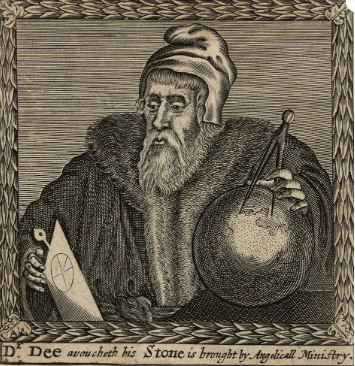
    Portrait of John Dee
    Portrait of John Dee

    In the twilight decades of the sixteenth century, the sprawling riverside estate at Mortlake housed the largest private library in England. Its custodian, Dr. John Dee, stood as one of the towering intellectual figures of the Elizabethan Renaissance. A brilliant mathematician, cartographer, alchemist, astronomer, and trusted advisor to Queen Elizabeth I, who selected the date of her coronation upon his astrological counsel. Dee was the very archetype of the Renaissance polymath. Yet for all his mastery of terrestrial sciences, Dee’s intellectual ambition refused to stop at the edge of the empirical world. Beyond geometry and navigation lay the ultimate metaphysical pursuit: recovering the divine syntax of creation itself.

    Dee operated under the prevailing Hermetic conviction that before the Fall of Man and the fragmentation of tongues at Babel, humanity shared a single, pristine dialect with God. This was the primordial speech of Adam, a language of divine essence in which names and things were identical. To speak a word in this lost tongue was not merely to represent an object, but to command its fundamental nature. Persuaded that centuries of mortal philosophy had reached an impasse, Dee concluded that this linguistic key could only be retrieved through direct revelation from heaven.

    Lacking the innate gift of psychic clairvoyance himself, Dee took into his confidence a shadowy, itinerant medium named Edward Kelley. An enigmatic alchemist and convicted forger whose cropped ears bore physical testimony to past deceits, Kelley presented himself as an instrument capable of penetrating the celestial veil. Together, in dim chambers illuminated only by tallow candles, the scholar and the scryer began their nocturnal conferences with the other side.

    The Obsidian Mirror
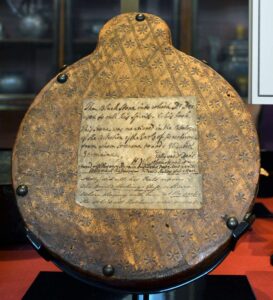
    John Dee's obsidian mirror
    John Dee’s Obsidian Scrying Mirror

    Their instrument of communion was a polished Aztec obsidian mirror, an artifact brought back from the New World that Dee believed could serve as a conduit between dimensions. Staring into its glossy, volcanic depths, Kelley claimed to behold the archangel Uriel and other celestial messengers. The transmission process was intricate and laden with dread. The spirits allegedly dictated an entirely new alphabet of twenty-one angular, talismanic glyphs, delivering texts strictly in reverse. According to Kelley, to utter the phrases forward during the transcription would unleash chaotic, reality-altering forces that mortal wards could not contain.

    The result of these exhaustive sessions was what modern occultists term the Enochian language, complete with an intricate grammar, distinct syntax, and a series of poetic invocations known as the Angelic Keys. Modern scholars and cryptographers continue to debate its origins: was it an early, remarkably sophisticated synthetic language engineered by Kelley to manipulate a desperate patron, a political Renaissance cipher designed to conceal state intelligence, or a genuine psychological anomaly born of Dee’s singular obsession?

    Whatever the truth behind the Mortlake sessions, the legacy of the angelic tongue did not vanish with the Elizabethan court. Three centuries later, the 19th-century occult revivalists of the Hermetic Order of the Golden Dawn resurrected Dee’s notebooks, transforming the Enochian script into the ritual cornerstone of modern ceremonial magic. Today, the obsidian mirror rests quietly beneath the glass cases of the British Museum—cool, dark, and silent, keeping the secrets of two men who tried to transcribe the architecture of heaven.
    Explore Further: The Hermetic Order of the Golden Dawn, a Victorian magical society that is still active today in various guises, used the Enochian language extensively in its rituals. 

  • Gazing Into the Void: The Dark and Mystical History of Scrying Mirrors

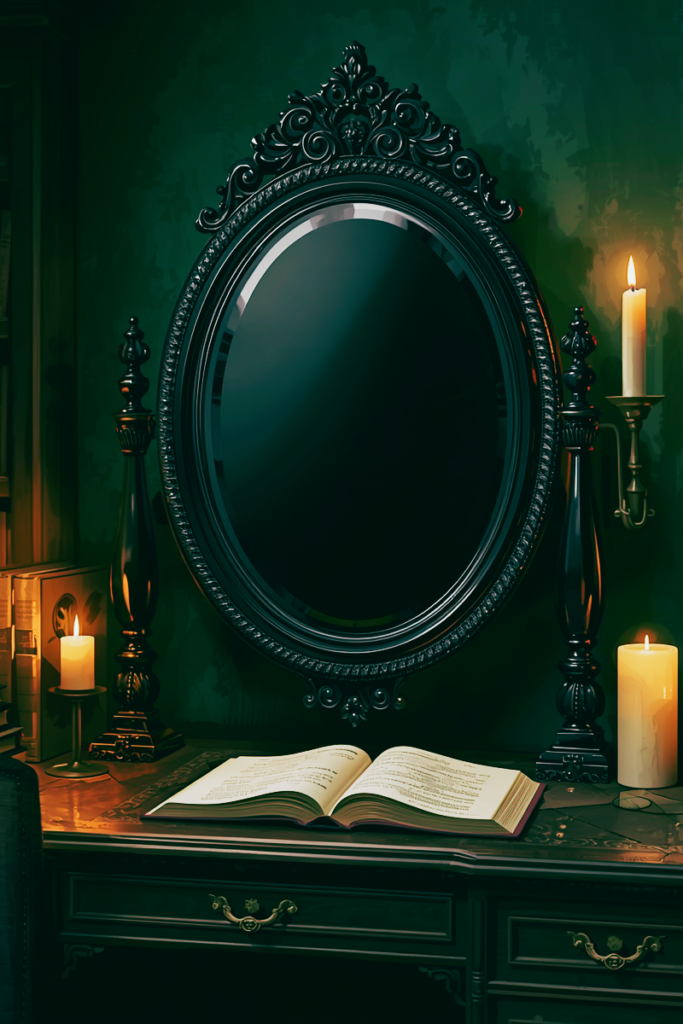
    Dark mirror on wall

    Archivist’s Note: This briefing may contain affiliate links. If you acquire an artifact through these links, the Archive may earn a small commission at no extra cost to you, which helps keep the candles lit.

    When you look into a mirror, you expect the world to reflect back at you exactly as it is. We use silvered glass every day to fix our hair, adjust a collar, or check for a smudge on our cheek. But for centuries, the mirror was not just a tool for vanity; it was a doorway.

    If you step away from the polished silver and look back through history, you will find a much darker artifact: the scrying mirror. Diviners, occultists, and royal advisors didn’t use mirrors to see themselves—they used them to peer into the unknown.

    The Art of the Black Mirror

    Black Mirror is the title of a popular TV show that focuses on dystopian (usually tech-centered) scenarios. But the name comes from something much older. The practice of “scrying” is ancient. It involves staring into a reflective, usually dark surface, like a pool of black ink, a bowl of water, or dark polished stone, until the eyes lose focus and visions begin to appear. It is less about seeing a reflection and more about creating a blank canvas for the subconscious (or the spirit world) to project upon.

    While many cultures practiced water-scrying, the most infamous mystical mirrors were made of solid black obsidian.

    Obsidian is volcanic glass. When highly polished, it becomes a dark, glossy void. Long before European occultists got their hands on them, these mirrors were sacred to the Aztecs in Mesoamerica. They were closely associated with the god Tezcatlipoca, whose very name translates to “Smoking Mirror.” He was the deity of the night sky, divination, and sorcery. The Aztecs believed these mirrors were portals that could bridge the mortal realm with the world of the divine.

    Dr. John Dee’s Angelic Conversations

    Following the Spanish conquest in the 16th century, these sacred obsidian mirrors were brought back to Europe. One of them fell into the hands of a man who would cement the black mirror’s place in Western occult history: Dr. John Dee.

    John Dee was no fringe eccentric; he was the mathematical and astrological advisor to Queen Elizabeth I. He was a brilliant scholar, but his pursuit of knowledge eventually pushed past the boundaries of science and into the occult. Dee wanted to understand the hidden mechanics of the universe, and he believed the answers lay with angels.

    Using an Aztec obsidian mirror, Dee would conduct exhaustive scrying sessions. Because Dee himself was not a gifted “seer,” he employed a medium named Edward Kelley to stare into the dark glass. Kelley would gaze into the black surface for hours, frantically reporting the angelic beings he saw and the cryptic, divine languages they spoke, while Dee dutifully transcribed every word.

    Today, John Dee’s obsidian mirror rests in the British Museum, a quiet, dark stone that once commanded the attention of the English court.

    The Victorian Parlor Seance

    Centuries later, the Victorians, who were always eager to blend the macabre with high society, revived the dark mirror. During the height of the Spiritualist movement in the 19th century, death was a cultural obsession. Grieving families and curious thrill-seekers alike gathered in dimly lit drawing rooms to attempt communication with the “other side.”

    Scrying mirrors became a popular tool for these parlor séances. But there is a very real, very unsettling psychological reason why staring into a dark mirror works. Modern science calls it the Troxler Effect. If you stare at a fixed point in a dim room for long enough, your brain begins to filter out unchanging stimuli. Your peripheral vision blurs, the edges of the mirror seem to warp, and your mind, desperate to recognize patterns in the dark, starts to invent them. Faces twist, shadows move, and suddenly, you are seeing ghosts.

    Whether it was true spiritual communication or just the mind playing tricks in the candlelight, the dark mirror solidified its place as an icon of the macabre.

    Curate Your Own Dark Academia Aesthetic

    If reading about John Dee’s dark mirrors has you wanting to add a little Dark Academia aesthetic to your own bookshelf , here are a few gorgeous, affordable pieces I found to recreate the vibe:

    Black Obsidian Scrying Mirror: A polished volcanic glass mirror, very similar to the ones used by the Victorians.

     Ornate Vintage Hand Mirror: If you prefer the look of the antique silver mirror from my video.

    Flickering LED Taper Candles: The safest way to get that perfect, moody seance lighting for your desk.