
Archivist’s Note: This briefing may contain affiliate links. If you acquire an artifact through these links, the Archive may earn a small commission at no extra cost to you, which helps keep the candles lit.
By the middle of the nineteenth century, London had become a city overwhelmed by its own success. Industry boomed, neighborhoods expanded, and hundreds of thousands of people poured into the capital in search of opportunity. But beneath the grandeur of the Victorian era lurked a grim problem that no amount of progress could hide.
There was simply nowhere left to bury the dead.
Churchyards across London had been used for centuries, and by the 1850s many had reached a horrifying state. Graves were dug over older graves, coffins collapsed into one another, and reports described human remains surfacing after heavy rain or construction work. The overcrowding wasn’t just unsettling—it was considered a genuine public health concern. As fears about disease spread through Victorian society, authorities searched for a solution that was as ambitious as the city itself.
Trains to Carry Corpses
The answer they arrived at was unlike anything the world had seen before.
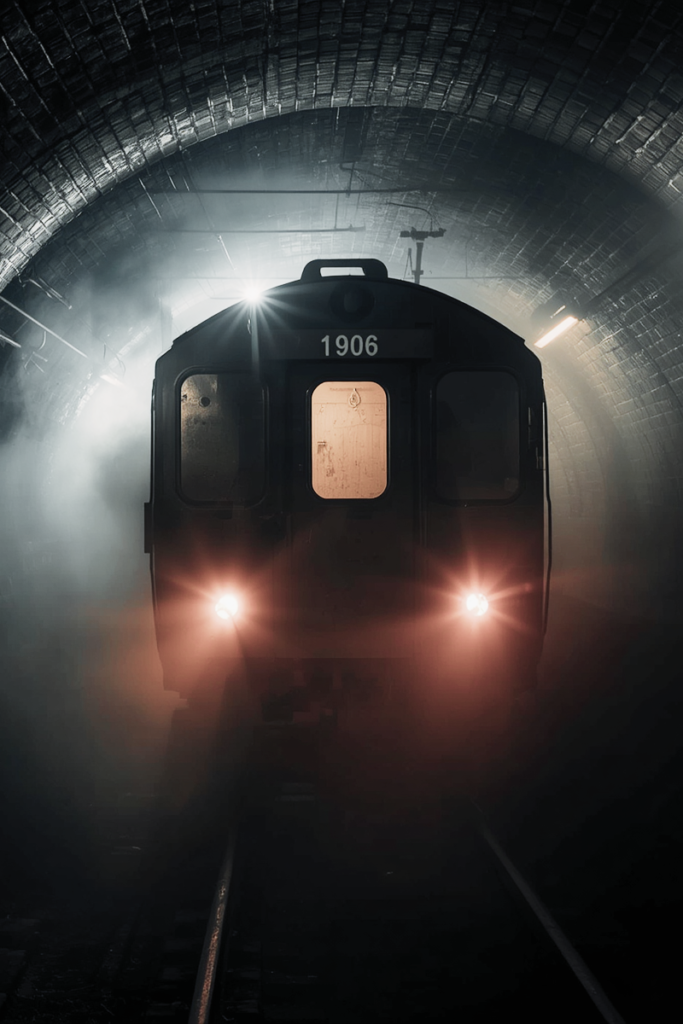
In 1854, the London Necropolis Railway began operating from a specially designed station adjacent to Waterloo. Rather than transporting commuters or freight, its sole purpose was to carry the dead—and those mourning them—away from the crowded capital to Brookwood Cemetery in Surrey, roughly 23 miles away. At the time, Brookwood was the largest cemetery in the world, created with the expectation that it could serve London’s burial needs for centuries.
It was, in every sense, a railway built for the afterlife.
The station itself functioned much like any other Victorian terminal, but with an unmistakably somber purpose. Funeral parties would arrive alongside specially prepared coffins, each destined for Brookwood’s vast grounds. The trains contained separate compartments for the deceased, while mourners traveled in passenger carriages nearby. Even in death, Victorian social customs remained firmly intact.
Passengers could purchase different classes of tickets.
Those able to afford first-class fares enjoyed more comfortable surroundings, while less expensive options were available for working-class families. The class distinctions extended to the burials themselves, with different sections of the cemetery reflecting the rigid social hierarchy of Victorian Britain. Death, it seemed, did little to erase class divisions.
The hearse vans that carried the coffins were carefully designed for their unusual cargo, providing secure and dignified transport. It may sound macabre today, but to Victorians it represented efficiency, respectability, and modern engineering solving a deeply practical problem.
Brookwood Cemetery itself became a city of the dead. Its sprawling avenues, towering trees, Gothic monuments, and weathered headstones created an atmosphere that still captivates visitors today. Walking its paths, it’s easy to imagine the arrival of one of those funeral trains, steam drifting through the forest as grieving families stepped quietly onto the platform.
The End of the Necropolis Railway
The railway continued operating for nearly a century, becoming an accepted, if unusual, part of London’s infrastructure. Generations of Londoners made one final journey aboard its carriages.
Its story came to an abrupt end during the Second World War. In April 1941, German bombing during the Blitz severely damaged the London Necropolis Railway station. Although Brookwood Cemetery remained, the station was never rebuilt, and the railway quietly ceased operation. Improvements in road transport and changing funeral practices meant there was little reason to restore such a specialized service.
What Still Remains
Today, only fragments of its remarkable history remain. Brookwood Cemetery still exists, peaceful and expansive, while the original London terminus has long disappeared beneath the modern city. Most people passing through Waterloo Station have no idea that, for decades, trains departed from nearby carrying not commuters, but coffins.
The London Necropolis Railway occupies that fascinating space where history feels almost fictional. It speaks to a Victorian world that confronted death not by hiding it away, but by organizing it with remarkable precision, engineering, and ceremony. There is something haunting about the idea of a railway timetable that once included departures for the dead, yet it also reflects the practical mindset of an age determined to solve even its darkest problems through industry and innovation.
So the next time you find yourself navigating London’s maze of stations and tunnels, remember that the city’s transport history isn’t only about the living. Hidden beneath the familiar rhythms of trains arriving and departing is the memory of a forgotten line—one whose final destination was not another neighborhood, but one of the largest cemeteries ever built.
Learn more – The Necropolis Railway: The Secret History of Transporting London’s Dead