
Archivist’s Note: This briefing contains affiliate links. If you acquire an artifact through these links, the Archive may earn a small commission at no extra cost to you, which helps keep the candles lit.
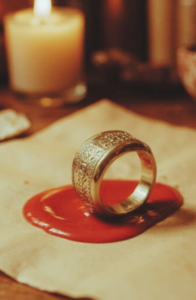
In a world of digital passwords and biometric scans, we have forgotten the weight of a physical secret. But in the 19th century, security was a matter of heat, pressure, and a single, unique mark of gold. To break a wax seal was a serious breach of privacy and a violation of some of that age’s most sacred values.
The Ritual of the Script
Before a letter was ever read, it was “authorized.” The sender would melt a stick of deep red or black wax over a flickering candle, letting the molten pool settle onto the parchment. Then came the moment of identity: the press of the seal. Whether it was a heavy brass desk seal or a gold signet ring worn on the hand, that impression was a legal signature. In an era where literacy was not universal, your mark was your bond.
The Wearable Signature: Desk Seals vs. Signet Rings
There is a distinct evolution in the tools of the Archive. A desk seal, often crafted with an ivory or wooden handle, was a stationary tool of the home office, a scholar’s instrument. But the Signet Ring was a wearable signature. It allowed the traveler, the soldier, or the diplomat to carry their identity with them.
These rings were often carved in intaglio—the image was sunken into a stone like bloodstone or carnelian, and always in reverse. To see the true face of the ring, you had to press it into the wax. It was a mirror image of the soul, revealed only in the act of sealing a secret.
The Sherlockian Connection
The stakes were high. A signet ring was so tied to an individual’s power that it was often destroyed upon their death to prevent forgeries. In the world of Sherlock Holmes or Agatha Christie, a tampered seal was the first clue to a deeper conspiracy. If the wax was cracked or the impression was off by even a fraction of a millimeter, the game was afoot.
The Modern Return to the Tactile
Why do we still crave the click of a brass seal today? Perhaps because some messages are too important to be digitized. When you seal a letter with wax, you are telling the recipient that the contents are for their eyes only. You are reclaiming a moment of deliberate stillness in a world of digital noise.
The Analyst’s Acquisitions Desk
If you are looking to begin your own ritual of the script, the Archive has curated a selection of authentic artifacts and tools:
Browse Antique Signet Rings Wearable history and heraldic identity.
Browse Vintage Desk Seals The stationary tools of the 19th-century scholar.
Aquire Sealing Wax & Supplies Everything needed to secure your own secrets.