Archivist’s Note: This briefing contains affiliate links. If you acquire an artifact through these links, the Archive may earn a small commission at no extra cost to you, which helps keep the candles lit.
If you want to destroy a civilization, you burn its books. But how do you erase a culture that refuses to write anything down?
When Julius Caesar marched his legions into Gaul and Britain, he encountered the Druids, who were the intellectual and spiritual elite of the Celtic world. They were philosophers, judges, astronomers, and magicians. Yet, despite their vast knowledge, Caesar noted something that baffled the bureaucratic Roman mind: the Druids strictly forbade the writing of their sacred lore.
This wasn’t out of ignorance; they were fully capable of using Greek and Latin alphabets for mundane trade and taxes. The ban on writing was a deliberate, fiercely guarded security measure. To write a spell, a genealogy, or a piece of tactical knowledge on parchment was to risk it falling into the hands of the uninitiated. Furthermore, they believed that relying on written text weakened the mind. A true Druid was a living library, required to memorize tens of thousands of verses over a grueling twenty-year apprenticeship.
But oral history has a fatal flaw: it bleeds out on the battlefield. As the Roman Empire expanded, bringing with it the Latin alphabet and the sword, the living libraries of the Celtic world were systematically hunted down. The Druids realized that memory was no longer enough to protect their culture. They needed a way to record their knowledge—but they needed to do it in a way their conquerors couldn’t understand.
They didn’t need a new language. They needed a cipher.
The Edge of the Blade
Enter Ogham (pronounced OH-am). Emerging in the early centuries AD, just as Latin was suffocating the native tongues of Europe, Ogham is one of the most unusual writing systems ever devised.
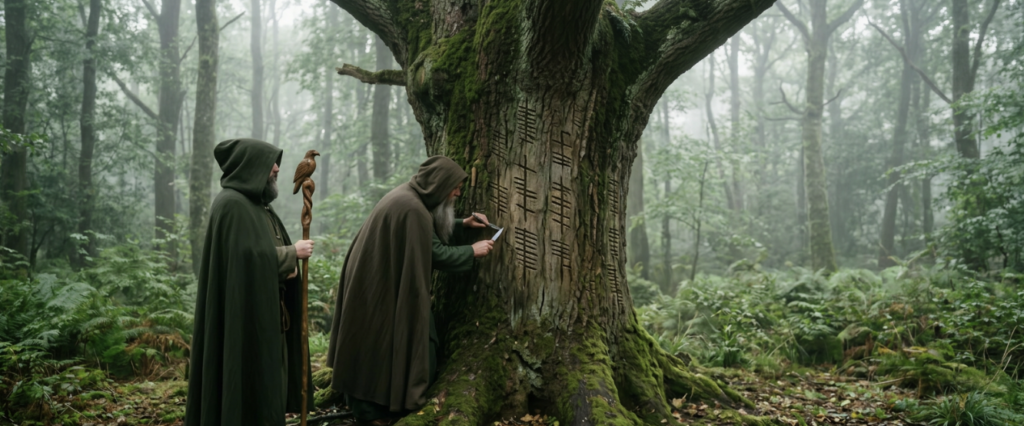
If you look at a piece of Roman parchment, the ink sits flat on the page. Ogham, however, is inherently tactile. It was not originally designed for the quill and vellum; it was designed for the chisel, the knife, and the edge of a stone.
The alphabet consists of a series of simple, straight notches intersecting a central, vertical line—known as the flesc (stem). Imagine the sharp corner of a standing stone, or the edge of a wooden staff. The carver would cut horizontal or diagonal strokes across that edge. One notch to the right meant one letter; two notches to the left meant another; three notches cutting straight through the middle meant something else entirely.
To a Roman soldier or a Latin-speaking missionary, a piece of wood covered in Ogham didn’t look like a document. It looked like tally marks, decorative borders, or the random scarring of a blade. It was hidden in plain sight.
But to an initiated Celt, running their fingers along the edge of that wood in the dark, it was a highly sophisticated phonetic code. It was used to mark territories, record genealogies, and, according to myth, cast silent magic. It was a rebellion carved into the very landscape—a secret alphabet that allowed the ghosts of the Druids to speak right under the noses of the empire.
The Monastic Rosetta Stone
As centuries passed, the Druids faded into myth, and the wild Celtic forests were slowly replaced by the stone walls of Christian monasteries. The original purpose of Ogham—as a covert rebellion against the Romans—was no longer necessary. Yet, the Irish monks who now held the monopoly on literacy refused to let the cipher of their ancestors die.
They brought the outdoor alphabet indoors. They took a script meant for the harsh edge of a stone and forced it onto the flat, unforgiving surface of animal vellum.
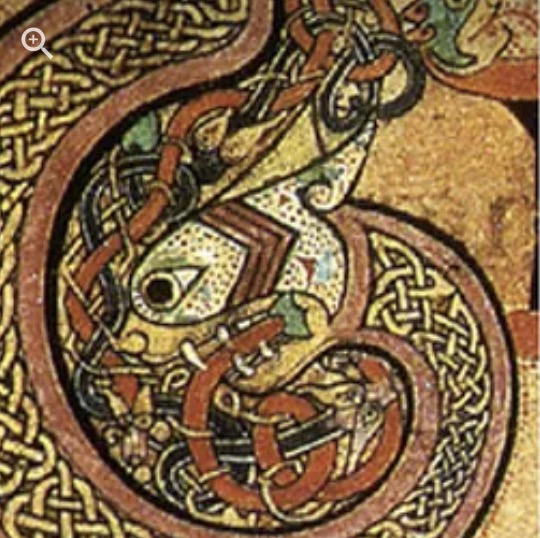
The ultimate culmination of this preservation effort is found in a massive, 14th-century manuscript known as the Book of Ballymote. Compiled by scribes in County Sligo, this heavy, leather-bound tome is a treasure trove of Irish history, genealogy, and mythology. But for our purposes, its most important pages contain the In Lebor Ogaim—The Ogham Tract.
The Ogham Tract acts as the Rosetta Stone for the Celtic world. Without it, the notches on the standing stones dotting the Irish countryside would be unreadable today. The manuscript not only provides the key to translating the standard Ogham alphabet into Latin letters, but it also reveals the sheer, obsessive complexity of the cipher. The scribes recorded over a hundred secret, cryptographic variations of Ogham used by scholars and poets. There was “Bird Ogham,” “Color Ogham,” and “Fortress Ogham,” where the letters were swapped out for specific categories of words to further confuse the uninitiated.
Through the iron gall ink of the Book of Ballymote, we see that Ogham wasn’t just a primitive alphabet; it was a Playground for the ancient mind, a puzzle box preserved on parchment.
The Tree Alphabet and the Modern Revival
Ogham might have remained a dusty academic curiosity locked in medieval manuscripts if not for a 20th-century poet who saw the magic hidden within the notches.
In 1948, the British poet and scholar Robert Graves published The White Goddess, a dense, highly complex, and deeply poetic exploration of ancient mythology. Graves became fascinated by a specific detail found in the old Ogham tracts: the names of the letters themselves.
In Ogham, the letter ‘B’ is Beith, which translates to Birch. The letter ‘D’ is Dair, meaning Oak. ‘C’ is Coll, meaning Hazel. Graves popularized the theory that Ogham was fundamentally a “Tree Alphabet.” He proposed that the Druids had created a system where the alphabet doubled as a taxonomy of the forest and a mystical calendar, with each tree representing different seasons, lunar cycles, and spiritual concepts. Oak stood for strength and doors; Birch stood for beginnings and purification.
While modern historians and linguists fiercely debate the historical accuracy of Graves’s more elaborate theories, the cultural impact of The White Goddess was seismic. Graves took a dead cipher and breathed life back into it.
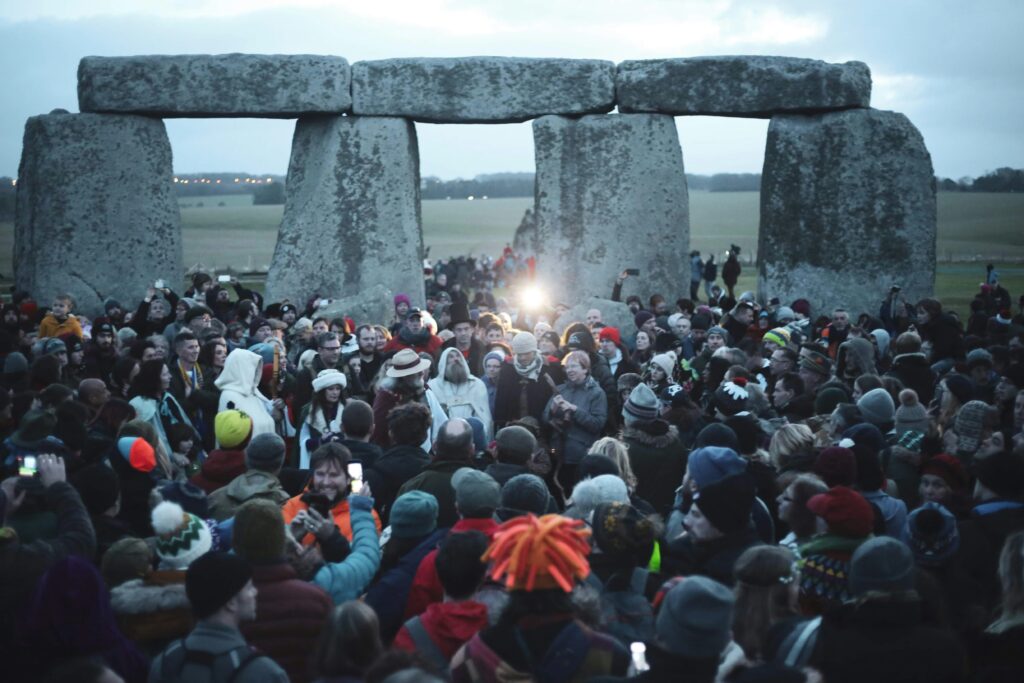
His poetic vision of the tree alphabet became the foundational text for the modern Celtic revival. It sparked the imaginations of neo-Pagans, artists, and fantasy authors. Today, if you walk into a new age shop, you will find Ogham carved into wooden staves for divination, or printed on tarot-style oracle decks. It has become a staple of modern fantasy literature, representing a deep, earthy magic that predates the written word.
The druids may have refused to write their secrets down, but their cipher survived. It evolved from a blade carving on a misty battlefield, to ink on medieval vellum, to a modern symbol of our enduring connection to the natural world.