
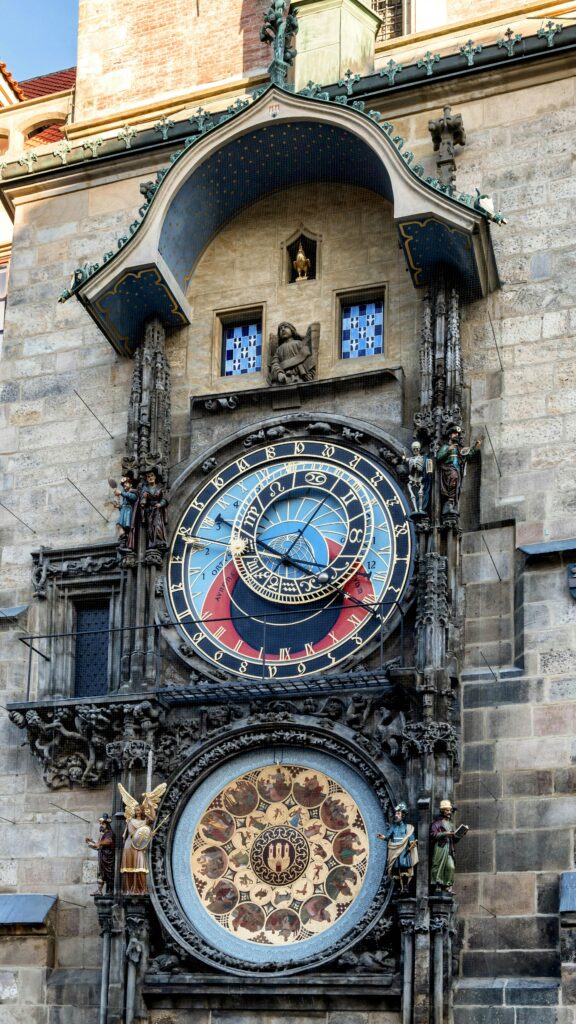
If you stand in the Old Town Square of Prague just before the hour strikes, you will find yourself in a sea of tilted heads and raised cameras. Everyone is waiting for the show. High above the cobblestones sits the Prague Astronomical Clock (the Orloj). It is a mesmerizing masterpiece of golden dials, painted zodiacs, and ancient mechanics.
But as the gears begin to grind and the heavy bells toll, look closely at the figure pulling the cord. It isn’t an angel or a monk. It is a skeleton holding an hourglass.
The Orloj is beautiful, yes. But like so many ancient artifacts, its history is steeped in betrayal, vanity, and a curse that allegedly stopped time itself.
The Legend of Master Hanuš
According to local lore, the magnificent clock was perfected in the late 15th century by a master clockmaker known as Jan Růže, or “Master Hanuš.” When the clock was unveiled, the city of Prague was the envy of Europe. No other kingdom possessed a mechanism that could not only tell time but map the movement of the sun, the phases of the moon, and the shifting of the zodiac.
But pride quickly bred paranoia. The Prague city councilors were terrified that Hanuš would leave their city to build an even grander clock for a rival capital. To ensure their clock remained the undisputed marvel of the world, they made a horrific decision.
Late one night, assassins hired by the council broke into the clockmaker’s home. Using glowing iron pokers hot from the fire, they blinded Master Hanuš.
A Final, Fatal Masterpiece
Knowing he had been betrayed by the very city he had brought such glory to, the blind clockmaker asked his apprentice to guide him up the stone tower to the great clock one last time.
Under the guise of checking the mechanism, Hanuš reached into the turning, crushing gears. He threw his hand into the intricate heart of the machine, destroying its delicate balance and mortally wounding himself in the process.
As Master Hanuš died on the floor of the clock tower, the golden hands of the Orloj skidded to a halt. According to the legend, the curse was so potent that the clock remained broken and silent for nearly a century, as none of the council’s new engineers could decipher the blind master’s ruined handiwork.
The Theater of Mortality
Even today, the clock is a beautiful but grim reminder of our own mortality. Every hour, the skeleton figure representing Death tips his hourglass and pulls a bell cord, signaling that your time on earth has just grown a little shorter.
Alongside Death, other figures shake their heads in denial: a man with a mirror (Vanity), a man with a money bag (Greed), and a man playing an instrument (Lust). It is a highly theatrical, mechanical warning from the Middle Ages to keep your soul in order.
As archivists of the obscure and the magical, it is hard not to look at the Prague Astronomical Clock and wonder about the things we leave behind. Some creations are so beautiful that they invite madness.
Have you ever seen an artifact that felt almost too meticulous? Let me know in the comments.
Bring the Archive to Your Desk
The Ink & Shadow Archive is reader-supported. As an Amazon Associate, we earn a small commission from qualifying purchases made through these links.
If the aesthetic of celestial mechanics and ancient timekeeping holds a place in your heart, here are a few beautiful, tangible pieces to add to your own curio cabinet:
Vintage-style Brass Astrolabe — A beautiful, heavy brass instrument perfect for a Dark Academia desk setup.
Antique-style Sand Hourglass – A nod to the Skeleton of Death on the Prague clock, this keeps time the old-fashioned way. Or just keep it as a decorative object and conversation piece.
Moving Gear Wall Clock – Bring the mechanical magic to your own library with exposed, rotating gears.