Tag: Galileo

  • Inside the Vatican’s Secret Archive

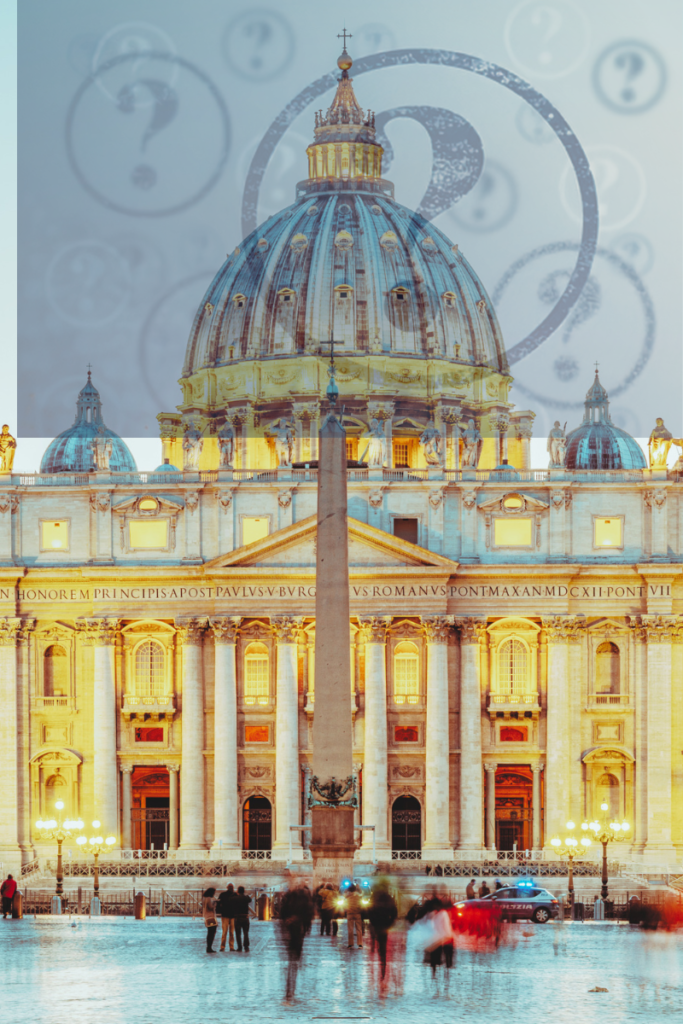
    Photo of Vatican City with question marks around the buildings.


    There is a quiet obsession shared among those drawn to ancient institutions, dusty bindings, and ink that dried centuries before our grandmothers were born. We dream of wandering lost corridors lined with forgotten knowledge, our fingertips brushing against centuries of leather and vellum. Yet, tucked beneath the pristine stone of Vatican City lies a labyrinth where no wandering scholar is ever allowed to roam.

    Carved into the earth beneath Rome rests an astonishing expanse: more than fifty miles of underground shelving, housing over two million historical documents spanning twelve centuries. For generations, this sanctuary of paper and wax seals carried a moniker that could easily belong to a gothic mystery novel: the Archivio Segreto Vaticano, or the Vatican Secret Archive.

    The name itself conjures vivid images of forbidden rituals, hidden apocrypha, and cloaked figures guarding blasphemous truths. In 2019, Pope Francis officially renamed the institution to the Vatican Apostolic Archive in an effort to demystify its reputation. Church officials were quick to point out that the Latin secretum originally denoted something private or personal to the pontiff rather than intentionally conspiratorial. However, a modern rebranding does little to erase the quiet allure of subterranean chambers containing millions of unread words. The name may have softened, but the secrets never left.

    What makes this subterranean repository truly haunting is not merely what it holds, but how strictly it is guarded. Even if you hold an advanced degree, obtain written endorsements from accredited universities, and navigate the labyrinthine vetting process required to gain entry, you will never be permitted to stroll among the stacks. Browsing is strictly forbidden.

    Instead, a visiting researcher sits in an austere reading room and must submit a requisition slip bearing a precise catalog index number. An archivist disappears into the vaults, locates the specific folio, and carries it back to the desk. This system creates an exquisite Catch-22 that reads like an impossible Borges puzzle: to view a manuscript, you must know its catalog number, but if a document was misfiled, lost between registers, or never indexed at all, you cannot request it. In a vault of two million artifacts accumulated over a millennium of wars, papal schisms, and palace intrigues, uncataloged ghosts inevitably linger in the shadows.

    For the manuscripts that can be summoned into the light, the gravity is palpable. Within those miles of steel shelving rest artifacts that shaped the course of Western history. Here lies the original 1633 trial transcript of Galileo Galilei, complete with the astronomer’s handwritten signature renouncing his view that the Earth moves around the sun. Tucked into other folios are the tragic love letters penned by Henry VIII to Anne Boleyn—stolen from England during the tumult of the Reformation—alongside desperate, handwritten appeals from Mary, Queen of Scots, begging Pope Sixtus V for intervention before she was led to the execution block.

    Perhaps most legendary of all is the Chinon Parchment. Overlooked and misplaced within the archive’s sheer volume for centuries, this battered sheepskin document from 1308 contains the papal investigation into the Knights Templar. Discovered by an archivist in 2001, the text revealed that Pope Clement V had quietly absolved the warrior monks of heresy before bowing to political pressure from the French crown to dissolve the order and burn its leadership at the stake.

    It is easy to see why the archive captivates the romantic imagination. We live in a world where almost everything has been digitized, indexed, algorithmically sorted, and instantly summoned with the flick of a thumb on glass. The idea that miles of physical paper still rest in subterranean darkness—shielded from casual eyes, preserving the triumphs, betrayals, and confessions of people long turned to dust—feels like an artifact from an older, more enigmatic era.

    The Vatican Apostolic Archive is not a repository of cinematic conspiracies, but something far more poignant: a vast, silent mausoleum of human memory, where millions of pages remain unread, patiently waiting in the dark.

    In recent news, the Pope has ordered expansion of the Vatican Apostolic Archive and Library.
  • The Lost Art of the Celestial Chart

    Archivist’s Note: This briefing contains affiliate links. If you acquire an artifact through these links, the Archive may earn a small commission at no extra cost to you, which helps keep the candles lit.

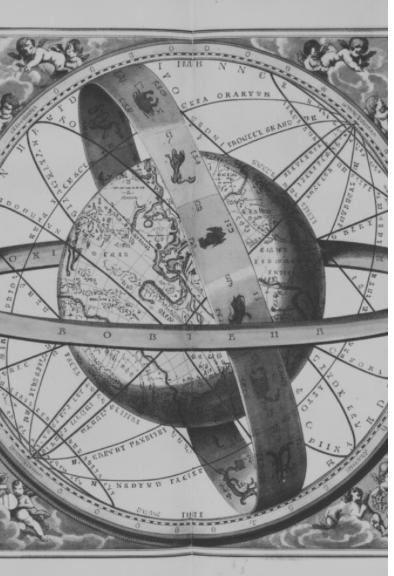
    Celestial map from Andreas Cellarius's Harmonia Macrocosmica atlas.

    In 1660, the night sky was more than pretty scenery; it was a living theater and the realm where gods, heroes, and monsters dwelt.

    There were no streetlights, no glowing screens, no light pollution softening the dark. When the sun went down, the heavens blazed to life—thousands upon thousands of stars stitched across an ink-black sky. For sailors navigating unknown seas and travelers crossing unmarked land, those stars weren’t poetic. They were essential. But they were also overwhelming. How do you memorize infinity?

    The answer, it turns out, was storytelling.

    Before astronomy became a discipline of data tables and telescope imagery, it was something closer to myth-making. Early celestial charts didn’t just plot coordinates. They populated the sky. That cluster of stars wasn’t merely a pattern—it was Orion, the hunter, forever pursuing the Pleiades. A curl of faint light became the tail of Scorpius. The art wasn’t decorative; it was mnemonic. Pictures helped observers remember what they were seeing. “That’s not just three stars,” a teacher might say. “That’s Orion’s Belt.” The sky became a cast of characters.

    In this era—the sky before science as we know it—magic and measurement shared the same page.

    The Most Famous Celestial Atlas of All Time

    Enter Andreas Cellarius.

    In 1660, the Dutch-German cartographer published Harmonia Macrocosmica, a celestial atlas that many consider the most beautiful ever created. If modern star charts are spreadsheets in the dark, Cellarius’s maps are theater. His pages glow with deep, velvety blues and luminous golds.

    Constellations are more than just patterns noticed by people with vivid imaginations. They are grand figures sweeping across the heavens: heroes brandishing swords, sea monsters coiling between stars, zodiac figures marching along the ecliptic. Ornate borders frame the skies, filled with cherubs, classical scholars, and elaborate cartouches. It is science wrapped in spectacle.

    Cellarius was working at a turning point. The 17th century was alive with astronomical revolution. It was the time of Copernicus, Galileo, and Kepler. The cosmos was being redrawn in radical ways. Yet Harmonia Macrocosmica still held onto the old visual language of myth. It mapped both competing models of the universe—the Earth-centered and the Sun-centered—without choosing sides too forcefully. In its pages, astronomy hadn’t yet shed its poetic skin.

    That’s why the atlas feels so alive. It belongs to a moment when observing the sky was not just technical; it was existential. The stars were navigational tools, religious symbols, astrological omens, and scientific data all at once.

    Today, our star maps look very different. Open a modern astronomy app and you’ll see clean lines, minimal design, precise labels. Efficient. Accurate. A triumph of clarity. But also, perhaps, a little sterile.

    The Fascination With Celestial Charts Persists Today

    Our fascination hasn’t faded.

    We may no longer steer ships by Orion or consult the heavens for prophecy, but we still decorate our walls with vintage star charts. We hang zodiac prints in our bedrooms. We stick glow-in-the-dark stars to our children’s ceilings. In cities where the real constellations are washed out by sodium lamps and LED glare, we recreate them indoors. It’s an act of quiet longing.

    Why?

    Because ancient celestial charts remind us that the sky once felt personal. The stars were not just hydrogen spheres millions of light-years away —they were hunters, queens, dragons, and bears. They were stories we could hold onto in the dark.

    In an age where we can barely see the Milky Way from our backyards, we still crave that sense of cosmic drama. We want the sky to mean something.

    The lost art of the celestial chart shows us that before science became specialized, it was beautiful. Before it became all about data and abstract theories, it was narrative. And perhaps that’s why these old maps endure, not just as historical artifacts, but as reminders that the universe has always been more than a set of coordinates.