
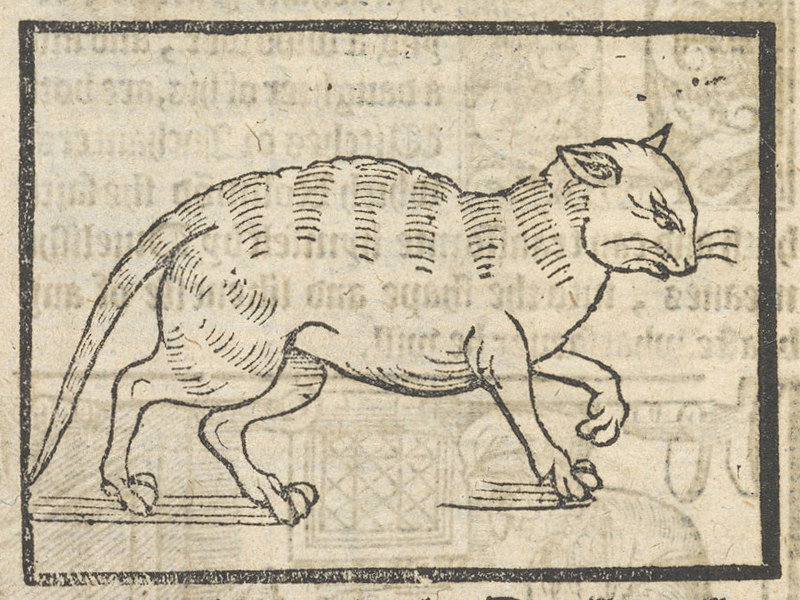
In Celtic lore, not all fairy encounters carried the pastoral wonder of popular Victorian retellings. For centuries across windswept moors and ancient coastal hollows, the veil between the mortal world and the Otherworld was thin, perilous, and populated by entities that demanded strict, cautious respect.
Among the most unsettling of these beings was the Cait Sidhe (also spelled Cait Sith, pronounced caught-shee)—a spectral creature whose shadow stretched across medieval superstition, fairy traditions, and early modern witchcraft lore.
The Steer-Sized Specter of the Moors
Unlike the domesticated familiars that curled beside hearth fires, the Cait Sidhe was not regarded as a common stray. Tradition described the creature as a formidable beast, often said to rival a calf or steer in stature, draped in jet-black fur broken only by a stark, irregular white patch upon its breast. It moved with unnatural silence across misty peat bogs and craggy hills, its back arched and bristled as though harboring an eternal grievance against mankind.
Ancient communities held one particular terror regarding the creature: the theft of human souls.
During traditional wakes, mourners would stand vigil over the deceased night and day without sleep. Fires were extinguished in the death-chamber, music and riddles were deployed to keep attendants alert, and sharp iron blades were laid near the bier. All of this vigilance served a single purpose: to prevent a Cait Sidhe from vaulting over the unburied corpse. It was believed that should the fairy cat leap across the body before burial, it would claim the departed soul for the Otherworld before heaven or earth could intervene.
Witch, Familiar, or Fairy King?
By the late sixteenth century, the folklore shifted and intertwined with the escalating panic of witchcraft trials.
Pamphlets such as the 1579 London treatise A Rehearsall both Straung and True…(from where the above illustration was taken) documented public anxieties surrounding feline familiars. Folk tradition whispered that a Cait Sidhe was not necessarily a pure fairy spirit, but a witch possessing the dark art of transformation. She could slip into the skin of a black cat up to eight times at will. Yet the power carried a fatal boundary: should she dare to assume the feline shape for a ninth time, the transformation would solidify forever, stripping away her humanity and binding her to the shadows of the Otherworld.
Others, however, revered the creature as an emissary of the legendary King of Cats—aristocratic, fiercely autonomous, and utterly indifferent to the authority of mortals.
From Celtic Shadows to Port Corvine: An Archival Case File
Folklore survives not merely in preserved manuscripts, but in the reimagining of its mysteries.
In our latest literary case file, The Druid’s Egg: A Cait Sidhe Tale, this ancient folkloric phantom steps out of Celtic mist and into the fog of the Pacific Northwest. Here, an aristocratic Cait Sidhe named Pangur makes his home inside an antiquarian bookshop, where he, along with his changeling companion Elara, finds himself dealing with century-old murder mysteries, uninvited ghosts, and a gang of vicious smugglers.
Advance Review Copies Available
In anticipation of the official release on November 20, we are making a limited number of Advance Review Copies (ARCs) available to readers, bloggers, and reviewers interested in early access.
If you enjoy cozy fantasy, antiquarian mysteries, and stories told from the dry, haughty perspective of an ancient fairy familiar, we would be delighted to have your early thoughts.
👉 Request an Advance Review Copy of The Druid’s Egg on StoryOrigin
(Complimentary review copies are available in EPUB, MOBI, and PDF formats for Kindle and e-readers. Early reviews on Goodreads and Amazon are warmly appreciated.)